ElizabethClaire.com

What's New?

Home

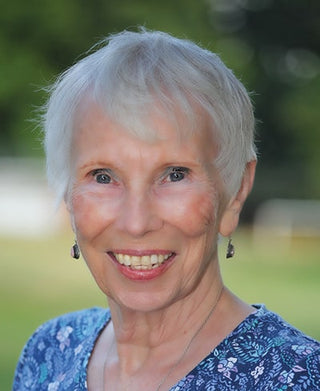
Who is Elizabeth Claire?

Easy English News newspaper

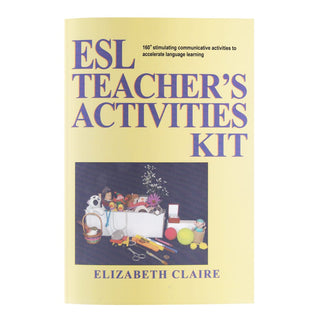
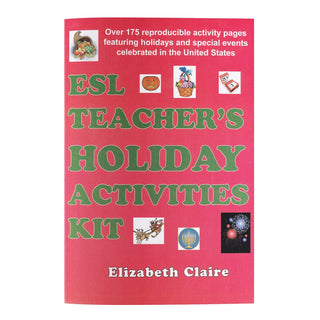
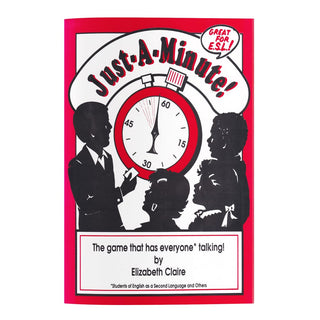
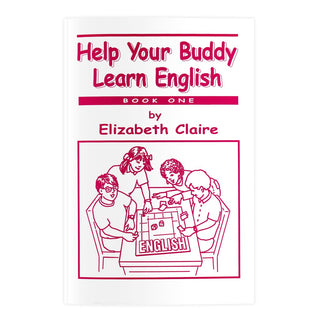
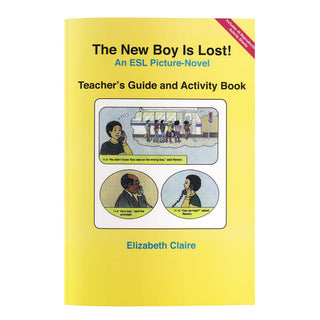
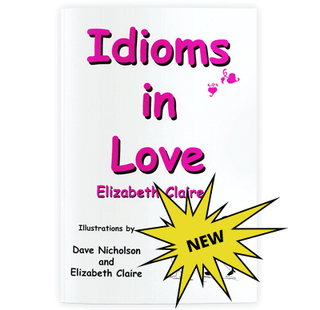
ESL Books by Elizabeth Claire

Order Easy English News or ESL Books

Send Your Comments, Stories and Questions

Please add me to your e-mail list.

What's New

Updated May 29, 2007

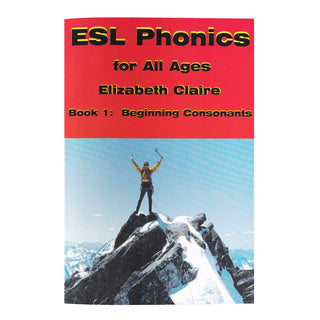
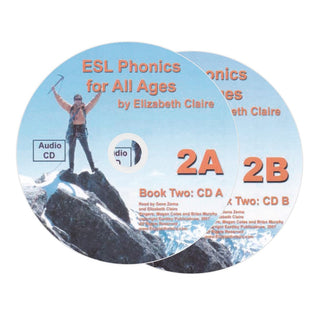
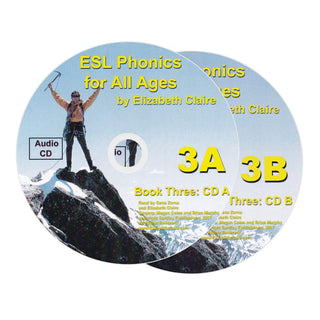
ESL Phonics for All Ages, Student Book 1

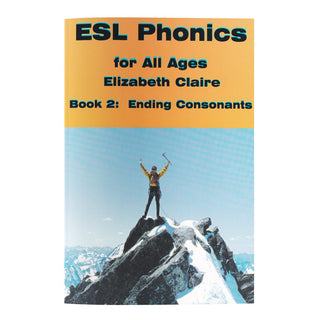
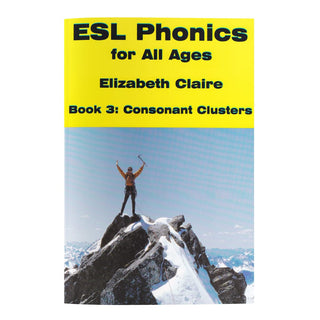
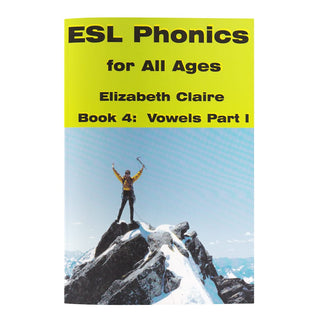
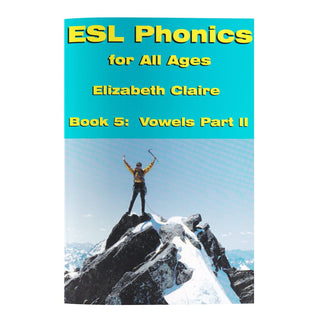
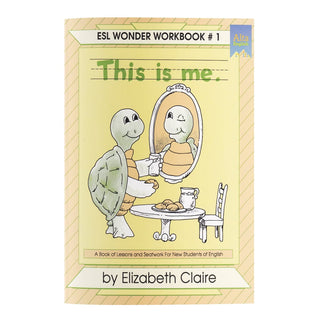
A six-book series designed both for English language learners who read in a non-Roman alphabet native language and for English learners who cannot read in any language. All six books presume a limited vocabulary in English and limited understanding of sentence structure. It has been extensively tested with students aged 7 to adult who are learning to read and write in English.
More information


Updated May 14, 2007

June Easy English News
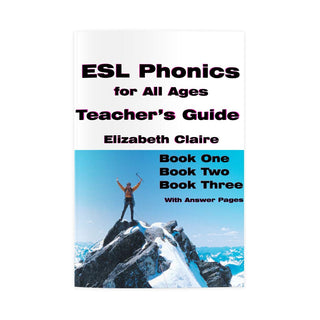
Teacher's Guide and Quizzes

June 2007 Teacher's Guide and Quizzes


Updated May 14, 2007

May Easy English News
Free Sample Newspaper

May 2007


Updated May 14, 2007

May Easy English News
Teacher's Guide and Quizzes

May 2007 Teacher's Guide and Quizzes


Updated March 23, 2007

April Easy English News
Teacher's Guide and Quizzes

April 2007 Teacher's Guide and Quizzes


Updated January 26, 2007

February Easy English News
Teacher's Guide and Quizzes

February 2007 Teacher's Guide and Quizzes


Updated December 8, 2006

January Easy English News
Teacher's Guide and Quizzes

January 2007 Teacher's Guide and Quizzes


Updated September 6, 2006

December Easy English News
Teacher's Guide and Quizzes

December 2006 Teacher's Guide and Quizzes


Updated August 6, 2006

Sample of Easy English News

June 2006


Updated October 19, 2005

November Easy English News
Supplemental Articles

Bird Flu article
(EEN April 2005: pdf format (98KB), Word format (21KB)

Supreme Court article
(EEN March 2005: entire paper in pdf format)


Updated May 8, 2004

The Fundy Spirit

The Summer Program at the Fundy Spirit has been escalated down to a "Drop in if you're in town" rather than a full-scale program. Just too many things going on! Books to write, beaches to comb, spirits to talk to. I am available for consulting on the beach, or tour-guiding. The home is available for long-term stays for writers working an ESL textbook or the great American (or Canadian or whatever) novel. Computers, printer, Internet connection, scanner and editorial services are on site.

The Fundy Spirit is a 130-year-old sea captain's home on the beautiful Bay of Fundy in St. Martins, New Brunswick, Canada, which I'll be preparing as a writers', artists' and ESL teachers' retreat. I'll be there this summer, writing articles for future Easy English NEWS editions, as well as other things "the spirits" dictate, and enjoying the great natural beauty, sweet-smelling air, outdoor fun, the stretchable Canadian dollar, and tranquility.

If you are vacationing this summer in the Northeast, go beyond the Maine border, cross into Canada (passport needed) at Calais/St. Stephen, take Canadian Route 1 and head for Saint John. Pass through Saint John, and after a few miles turn right onto Route 111 which will take you through the woods to St. Martins. It's a tiny little village of about 400 people, fairly isolated from "the real world." I'm planning all sorts of support for people working on writing projects, short term and long term, plus future teacher training. Email me for more information at ESL@Elizabethclaire.com


"Bay of Fundy English"

I was the ESL director of a Japanese-run summer language camp for several years, and learned the power of having language go in with the naturally fun activities of a kids' camp. Why not have that for adults?

Starting in the summer of 2005 or later, I'll host one or more teacher-training seminars in what I call "Bay of Fundy English." This involves students' learning a new language while in the midst of a glorious vacation, with "all the English they need" to talk about the day's plans and adventures: Students will beachcomb, explore sea caves, pick wild blueberries, bake pies, collect jewel-like stones from the water's edge, create crafts, hike in the scenic Fundy Trail, bicycle to a light house and to an exotic animal farm, meet miniature horses, take photos, create T-shirts, listen to local people tell their "true ghost stories", swim in sparkling rivers, learn to kayak, learn the science of the highest tides of the world, birdwatch at lush saltmarshes, fish for mackeral at high tide, study the stars and constellations, barbecue on the beach with good friends and sing old and new camp songs. In other words, a "summer camp" for adult language learners packed with good times and tons of English to talk about it.


After training teachers in the techniques of "Bay of Fundy English" and familiarizing you with the local outdoor and historical opportunities, the next step is to let students know about this unique opportunity to learn English while they make new friends, see new opportunities, and have English imprinted forever unforgettably as it will enter the mind in highly-emotionally charged pleasurable ways.

I see this as a wonderful way for ESL teachers to gain CEU's while "on vacation" as they are trained for a week, and then either stay on to teach, or return following summers to combine those two pleasures we ESL teachers love: -teaching students, and recharging our own batteries in a cool and beautiful locale.

The students would be recruited from Canada, the U.S. and anywhere else. It will be limited to adults, (managing kids away from home is too hair-raising a task for me to tackle) tho we can take families, too. Lodging would be at local Bed and Breakfast establishments, or "rent a tent" at a campground by the Bay. Local townsfolk (many retired people, as well as unemployed teens and young folk) would be employed as "personal informants" for each student to have a private conversational partner an hour a day.

St. Martins has a proud past as the sailing ship capital of the East--The Loyalists who left the U.S. after the revolution found that the land would scarcely support them by farming, but tall timbers and a good harbor were ideal for ship building. That long-ago pride faded with the advent of steamships, and the village is a tiny remnant, now subsisting on the summer tourist trade. The NB government has spent many millions of dollars to enhance the access to some of nature's most glorious scenery along the Fundy Trail, just a few miles from St. Martins.


What do Non-linear, non-traditional educational programs have to say to the ESL and Bilingual teacher?

Excerpts from NYSTESOL First Day Plenary, November 7, 2003:

Have you ever seen a flea circus?

I haven't either, but I've heard of them. And at the basic course at Landmark Education, I heard the story of how the flea trainer trains the fleas.
Fleas are naturally very energetic little creatures that can jump about 45 times their own height. That's about this high.

So the trainer gathers up a bunch of fleas in a jar.
The fleas will jump with enough energy to jump a foot into the air, but will hit the top of the jar, about 5 inches, bump their lil heads and fall down. They'll do that a number of times and before you know it, they'll be jumping just the right height so they don't hit the lid of the jar.

Then you can take the lid off, spill out all your fleas onto the table, and you have a little circus of fleas LID was. The fleas have no way to undo their behavior just because the LID has been removed. And they'll jump only so high for the rest of their lives.

In some ways, we humans are trained pretty much like the jumping fleas. We create our own LID by the protective but negative things we said to ourselves whenever we got hurt more than we could take at the time. When we were laughed at, or punished, or felt rejected for something we did, we made decisions like "I'll never do THAT again!"

As adults we are still carrying around the lids that stopped us when we were three, four, five, six, ten, twelve, eighteen years old. We don't look up to see if the decisions we made are valid, or if the lid is any higher than the way we remember it in childhood, because all the other folks in our circus are jumping to just about that height, too.

How many of you have said, "I can't sing?"

How many of you have said, "I can't draw?"

How many of you have said, "I can't speak in public?"

We know that healthy three-year-olds love singing, drawing, and chatting away to anyone. It's our birthright. It's self expression.

What's missing is training and practice and support.

When we look at the accomplishment of Martin Luther King, Jr., or Oprah Winfrey, or Cesar Chaves, or others who made a huge difference, we might say, What special training did they have to make such extraordinary contributions? What social class did they belong to, how rich were they? They must have been geniuses, right?

We look for the ways they had advantages over us, so we can find an excuse for saying, "I'd never be able to do what they did." We think they had something we don't have. It's the reverse. We have something they didn't have. We have the LID on, and the LID stops us. Those acclaimed heroes are just like us, but they are jumping to the normal capacity, without the LID, see?

So, how do we get ourselves and our students jumping to our normal capacities through our lives?

What's the best form of teacher training? It's to have new teachers be apprenticed to master teachers. The apprentices get to see a role model of effectiveness. This cuts down on years of muddling through for you, and you don't have to invent all the wheels for managing, scheduling, planning, disciplining, and teaching.
That's great. That's non-linear learning.

And if there were ever a contest for the world's greatest master teacher today, in my opinion, Anthony (Tony) Robbins would win hands down.

Tony Robbins is the highest paid teacher in the world. In fact, he may be the highest paid anything. He earns a few million dollars for each of his weekend classes. And he's well worth it.

Have you ever gone to a wonderful wedding where the music was terrific, everyone was dancing, and the conga line went around the room, and everyone was related? And you got into a state of very high energy and relatedness and pure joy? Didn't you wish you could bottle that energy and aliveness?

Well, Tony Robbins' courses are like that, it's like going to the best wedding ever.

Toastmasters don't eat toast, and they don't drink toasts. Toastmasters, International is an organization for . . . . training and practicing public speaking.

There are 9,000 Toastmasters clubs around the world. These clubs are cooperatives. There are no paid instructors. The senior members are mentors and role models and support system for the newer members. People do this for their jobs or just for a hobby.

There is no charge for visitors, they always like the extra listeners. You can find a club in your area through the internet, call the club president, and go to a meeting. Bring your adult advanced ESL learners too.

The secret at Toastmasters is that there is a full awareness of our vulnerabilities. Toastmasters clap for your courage, as well as your content. Each toastmaster is also trained in giving evaluations that assure that the speaker's ego is protected.

What can ESL teachers learn from Toastmasters? The concept I think is most valuable is that a class can be trained to listen to each other and find ways to support each other. The format of the Toastmasters meeting is great for speaking classes. Teachers could have a toastmasters club for teachers and students after school. A nearby toastmasters club might be willing to mentor it. Clubs get credit for community outreach.


The great Chinese philosopher Lao Tse said, 3000 years ago, Three things are invisible:
Water, to a fish.
Air to a bird.
And humanness to a human being.

The Landmark Forum, the basic course, is a Socratic inquiry into the nature of human being. The humanness that is invisible to us gradually becomes visible. They used mirrors. That is, we could see ourselves and our blind spots by seeing others bump into their blind spots.

In the course, I got familiar with my little voice, you know, the Judger up here.. I came to the conclusion that the little voice that talks to me, and that comments on the passing scene and everything instantly and automatically---that little voice that I had been calling my self,

was not me,

and was not even my best friend.

Because in addition to doing its job of watching out for me, it was also. . . . .the repository and generator of

the LID. Remember the flea circus and the LID?

Communicating with Power can be enhanced by the programs available through Anthony Robbins, Toastmasters International and Landmark Education. You can find out more about their programs at their websites on the Internet.


Updated March 12, 2004

1. Reproducible Quizzes and Teacher's guide for each issue are now included in all orders for two or more copies of Easy English NEWS.

This four-page supplement to the newspaper will contain teaching tips and comments on the current issue of the Easy English NEWS, as well as reproducible quizzes and answers.

Back to Top

History of Middle East Problems

Updated May 29, 2002.

Most Americans do not know much about the history of the Middle East. History can explain why Israel and the Palestinians are fighting. But history does not tell what will make peace between them.

The American people do not agree on which side is right. Most of them have been confused about the Middle East for a long time. Even President Bush has changed his mind several times.

Some people say, “Might makes right.” That means, whoever has the strongest forces will win. Then they will say it proves that they were right. This means that friends of Israel, and friends of the Palestinians will want to help. These other countries will get pulled into the war.

When did the troubles begin?

The modern country of Israel was born in 1948. This Jewish homeland was created by the United Nations.

Palestinians who lived in Israel were terrified by Israeli armies. They left their homes. A war began almost immediately. Israel's Arab neighbors (Egypt, Jordan, Syria and Iraq) came to help the Palestinians to get their land back.

Israel won that first war. The Arab neighbors had a United Arab League. One of its purposes was to "erase Israel from the map."

Whose land is it?

Before 1948, the land was called Palestine. At the end of World War I (1918), Palestine had become a “protectorate” of Great Britain. Most of the people who lived there were Arabic, but many Jews lived there, too.

Here is a brief outline of who owned the land, from the beginning of history:

600,000 - 10,000 BC. The first people arrived in the area.

3,000 - 2,000 BC This was the land of the Canaanites
Around 1,250 BC , the Israelites arrived at their "Promised Land" They conquered the Canaanites, and moved in.

928 BC: Two kingdoms were here: Israel and Judah

721 BC: Assyrians conquered Israel.

586 BC: Babylonians conquered Judah, moved the people to Babylon and destroyed the Jewish temple built by Solomon.

539BC: Persians conquer Babylonians. They let the Jews return to their homes.

333BC: Alexander the Great conquers Persia. Palestine is ruled by Greek kings.

323BC: After Alexander dies, the land is ruled by Egypt and later by Syria

165BC: Jews rebel against the Syrian ruler. They win, and form an independent state.

63BC: The Roman Empire incorporates the land of Palestine

70 AD The Roman Emperor puts down a rebellion and forces the Jews to leave. This is called the "Diaspora." Jews lose their homes and flee to all parts of the Mediterranean.
132-135: A Roman city is built on the ruins of Jerusulem.

330-638: Byzantine Empire includes the land of Palestine.

638: Muslim Arabs end the Byzantine rule of Palestine.

1099-1187: Christian crusaders establish the "Latin Kingdom of Jerusalem".

1187: Saladin, A Muslim, conquers the crusaders, and drives them from Palestine. Palestine is ruled from Cairo.

1516-1917: Palestine is part of the Ottoman Empire. It is governed from Istanbul.

1882-1903: 25,000 Jews (Zionists) immigrate to Palestine from Eastern Europe.

1896: Theodor Hertzl, a journalist from an Austro-Hungarian origin published Der Judenstaat (The Jewish State). He advocated the establishment of a Jewish state in Palestine or elsewhere.

1897: First Zionist congress in Switzerland issues the Basle Program "calling for a home for the Jewish people in Palestine" and establishes the WZO (World Zionist Organization)

1901: JNF (Jewish National Fund) set up by the 5th Zionist congress to acquire land (in Palestine) and 'make it Jewish'.

1904-1914: Second wave (around 40,000) of Zionist immigrants arrive in Palestine and increase the Jewish percentage to 6% of the total population.

1914: World War I starts.

1917- November: The Balfour declaration - United Kingdom foreign minister declares UK support for establishing a Jewish state in Palestine.

1918: September: British forces occupy Palestine
- October: World War I ends.

1919- 1923
- Third wave of Zionist-Jewish immigrants (around 35,000) raising their percentage in Palestine to 12%, with land ownership at 3%.

1921: Disturbances in Haifa protesting Zionist waves of immigration leading, to casualties of 46 Jewish immigrants.

1922: League of Nations approves British mandate over Palestine.

1929:- August: clashes over the Western (Alburaq) Wall in Jerusalem. Clashes led to 116 killed and 232 wounded among
Palestinians (mainly by British fire) and 133 dead and 339 wounded among the Jewish side.

1929-1939: 5th Zionist immigration wave brings 250,000 immigrants raising their percentage to 30% of the population.

1937: Peel committee report recommends partitioning Palestine into Jewish state and one for Palestinian Arabs, in addition to British protectorates including Jerusalem. Reports refers to forced transfer, if needed, of Palestinians from the 'Jewish' part.
- July: Arab Higher Committee rejects the Peel recommendations, calls for Independence of whole Palestine with protection for the rights of all and the British interests.

1939: calls for: conditional independence of a Palestinian state after ten years, acceptance of 15,000 Zionist immigrants a year
for 5 years, then by Arab agreement.

1939- September 1: World War II begins.

1940 - 1945
- Over 60,000 Zionist/Jewish immigrants enter Palestine . Jewish/Zionist percentage rises to 31% and land they control to 6%.

1945
May 8: World War II ends.

London, suggests a federal plan (M-G) to solve the Palestinian problem.
Suggestions rejected by both Zionist and Palestinian leaders.
1947- September 8: UNSCOP report published. Majority of its members suggest partition, minority suggest federal solution.

- September 16-19: Arab League denounces partition, forms a committee to help in Palestinian defense needs

- September 26: Britain decides to end its mandate over
Palestine

- November 29: UN general Assembly votes on an amended partition plan calling for a 56.5 % of Palestine for a Jewish
state, 43 % for a Palestinian one and internationalization of Jerusalem. Votes were 33 for, 13 against, 10 abstinations.
Arab representatives left the meeting.
Fights, invasions, attacks, massacres.

- April 17, 1948: Security Council calls for a military and political truce

- April 20: USA brings its trusteeship proposal to the UN

- April 21:. British forces leave Haifa. Jews expel 50,000 Palestinians.

- May 14: An Israeli state was declared in Tel Aviv at 4 pm. USA president Truman recognizes the state

- May 15: British mandate ends. Israeli state declaration takes effect.

- May 15 - 17: Armies from Lebanon, East Jordan, Iraq, and Egypt attack Israel on four fronts.

- May 22: UN Security Council issues a resolution calling for a ceasefire

1949: Israeli-Egyptian truce. Egyptian forces leave Faluje and keeps Gaza-Rafah strip.

- March 23: Israeli-Lebanese truce. Israeli forces withdraw from most Lebanese areas.

- April 3: Israeli-Jordanian truce.

- July 20: Israeli-Syrian truce.


Geneva Convention.
1950


1967: The six-day (June) war; occupation of the rest of Palestine;
1968: PFLP (Popular Front for the Liberation of Palestine) founded

1973: October War (Yom Kippur); PLO granted access to the UNSC; UN General Assembly resolution 3379

1977: Begin's (Israeli PM) autonomy plan

1979: Israeli-Egyptian Peace Treaty; Int'l Day of Solidarity with the Palestinian People declared; UN res. 446, 452
(againstIsraeli settlement policy)

1987: The first Intifada

1988: Palestinian Declaration of Independence

1991: Gulf War

1995: Oslo II agreement; Y. Rabin assassinated by an Israeli.

Source: http://www.palestine-net.com/history/bhist.ht

Back to Top